

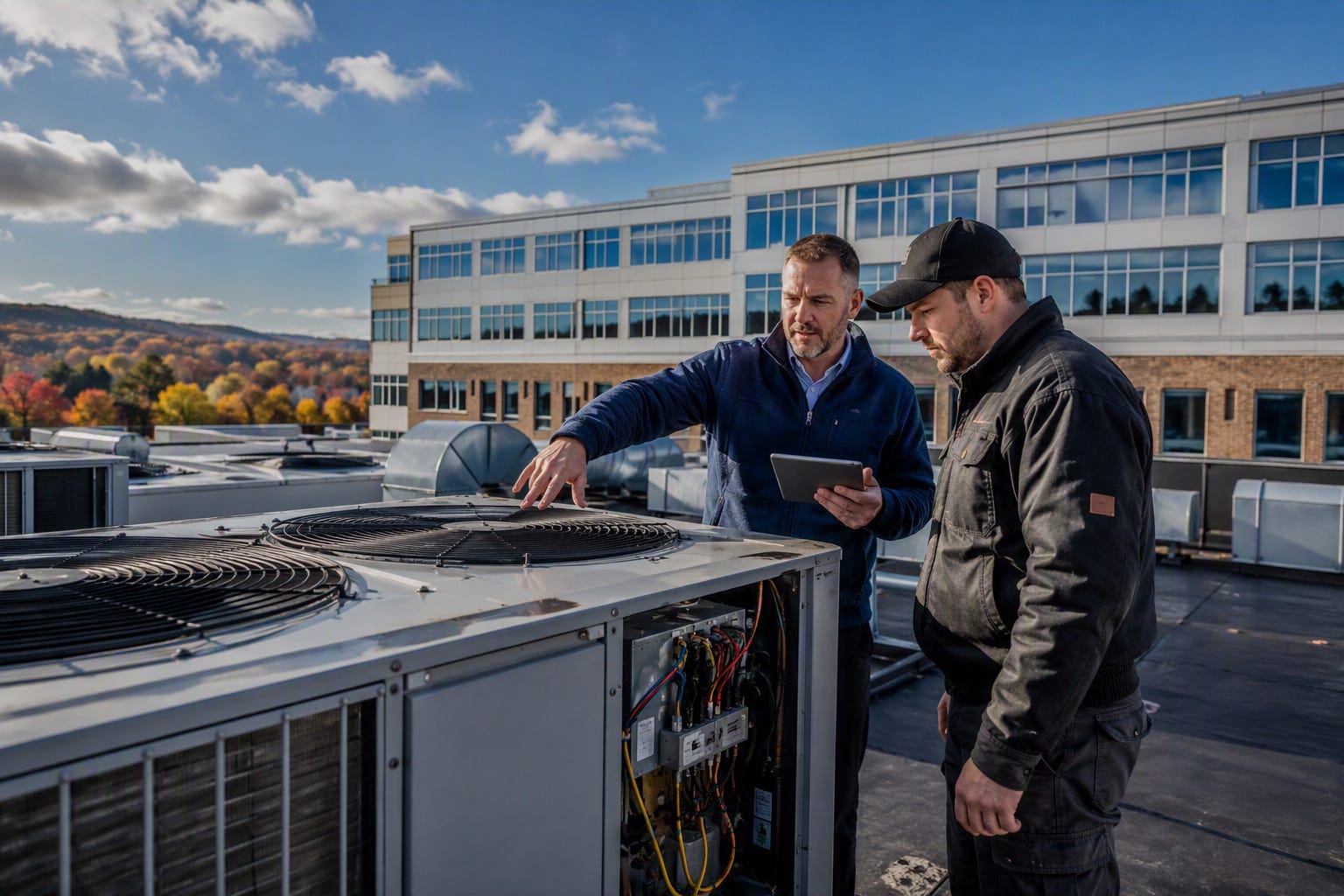
Large Buildings Are Not Just Bigger Small Buildings
A 40000 sq ft commercial building is not simply a larger version of a small property.
The management complexity changes completely.
More tenants. More systems. More vendor exposure. More CAM complexity. More capital planning risk. More potential for financial leakage. More ways for small issues to become expensive problems.
At CTR Property Management, we manage commercial buildings with the understanding that larger assets require a more sophisticated operating system. Owners of office, mixed-use, retail, flex, and industrial buildings in the Upper Valley and across New England need more than rent collection and basic maintenance coordination.
They need real asset control.
1. Larger Buildings Require Stronger Operating Systems
In a small building, informal management can sometimes survive.
In a 40000 sq ft commercial property, informal management creates risk.
A larger asset needs:
documented work order tracking
formal vendor scopes
preventative maintenance schedules
lease abstracting
CAM recovery systems
capital planning
owner reporting
tenant retention workflows
life safety compliance tracking
Without these systems, ownership eventually loses visibility.
The building may look fine from the outside, but underneath, NOI can be leaking through missed recoveries, deferred repairs, poor tenant communication, and weak vendor controls.
2. CAM Recovery Becomes More Important
Operating expense recovery matters in every commercial property.
But in a larger multi-tenant building, CAM errors become magnified.
A small coding mistake, missed admin fee, incorrect gross-up calculation, or misunderstood cap can cost thousands of dollars year after year.
CTR’s approach is to tie lease abstracts directly to accounting. We do not treat CAM reconciliation as an annual scramble. We treat it as a year-round discipline.
That means:
lease clauses are reviewed early
recoverable and non-recoverable expenses are coded correctly
tenant caps and exclusions are tracked
year-over-year variances are documented
tenants receive clear explanations
Strong CAM management protects owner income and reduces tenant disputes.
3. Vendor Management Has to Be Professionalized
Larger properties typically require a deeper vendor bench.
That may include:
HVAC contractors
roofers
electricians
plumbers
janitorial vendors
snow contractors
landscapers
life safety vendors
elevator vendors
security providers
waste and recycling services
The issue is not just hiring vendors. The issue is controlling scope, pricing, quality, response time, insurance, and documentation.
CTR Property Management uses structured scopes of work, bid comparisons, preferred vendor relationships, and quality control processes to keep vendors accountable.
The best commercial property managers do not just “know people.” They know how to manage, document, and hold vendors to standards.
4. Tenant Retention Has to Be Managed Earlier
In large commercial buildings, losing one major tenant can materially affect the asset.
That is why we do not wait until 90 days before lease expiration to think about renewal.
We track:
lease expirations
tenant satisfaction
work order trends
expansion needs
downsizing risk
payment behavior
relationship health
Our renewal conversations often begin 12 to 18 months before expiration.
This allows us to identify issues early, offer practical space solutions, plan mini tenant improvements, and reduce the chance of surprise move-outs.
Tenant retention is not luck. It is a management process.
5. Capital Planning Cannot Be Reactive
Large buildings have expensive systems.
Roofs, boilers, chillers, elevators, parking lots, fire systems, electrical infrastructure, and exterior envelopes all require planning.
Reactive capital planning is one of the fastest ways to damage cash flow.
CTR builds capital plans around:
remaining useful life
condition assessments
tenant impact
urgency
cost estimates
phasing opportunities
lease timing
financing and ownership objectives
A large building should not be surprised by a major system failure. Most failures give warning signs. Good management catches them early.
6. Owner Reporting Must Be More Than Accounting
For larger commercial assets, owners need reporting that explains what is happening, not just what was spent.
CTR reporting focuses on:
occupancy
collections
work order activity
vendor performance
budget variances
CAM recovery
tenant risks
capital items
leasing activity
compliance status
The goal is simple: ownership should never be surprised by the condition, performance, or risk profile of the asset.
Final Thought
Large commercial buildings need a different kind of property manager.
They require discipline, systems, vendor leverage, accounting knowledge, tenant strategy, capital planning, and consistent communication.
For owners of 40000 sq ft commercial buildings in the Upper Valley, New Hampshire, Vermont, Massachusetts, and broader New England, the right management partner can protect NOI, reduce risk, and improve long-term asset value.
If you are interested in working with us to help increase your property’s value and increase your NOI, visit us here: CTR.PM →